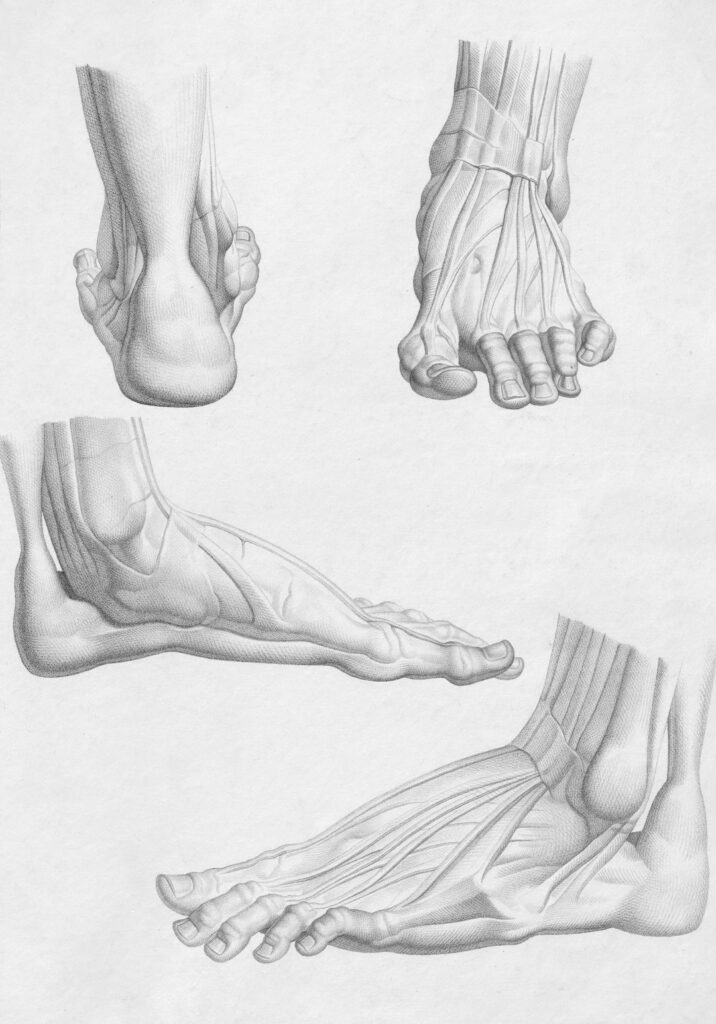
Foot pain is sometimes treated as an isolated problem, but the feet work as part of a connected movement system that includes the ankles, knees, hips, pelvis, and spine. Changes in one area can influence how the others move, especially during walking, standing, stair climbing, or exercise.
That does not mean every sore foot is caused by a spinal alignment problem. Foot pain may result from an injury, arthritis, tendon irritation, nerve symptoms, footwear, overuse, or a local foot condition. The useful question is whether the pain is connected to a broader movement pattern.
How can foot mechanics affect the spine?
The feet are the body’s first contact with the ground. As they absorb and transfer force, their position can influence the motion of the lower legs, knees, hips, and pelvis.
For example, a foot that rolls inward during walking, often called pronation, may be associated with inward rotation of the lower leg. That movement can continue upward through the knee and hip, sometimes changing how the pelvis moves. A high-arched or stiff foot may absorb less shock, which can increase the demand on the ankle, knee, hip, or lower back.
These effects are usually subtle. The body can compensate in many ways, and a particular foot posture is not automatically abnormal. Research has found relationships between foot posture and lower-limb movement, but the strength of those relationships varies from person to person.
Spinal alignment is also more than whether the back looks perfectly straight. It includes how the spine, pelvis, and surrounding muscles coordinate during movement. A person may have a structurally normal spine but still develop strain because of repeated uneven loading.
Can spinal problems cause foot pain?
Yes, some spinal conditions can contribute to foot symptoms, particularly when a nerve is irritated or compressed. Nerves traveling from the lower spine into the leg and foot can produce pain, tingling, numbness, burning, or weakness.
Foot symptoms related to the spine may have features such as:
- Pain that travels from the back or buttock into the leg
- Tingling or numbness in part of the foot
- Weakness when lifting the foot, raising the toes, or pushing off
- Symptoms that change with sitting, bending, coughing, or prolonged standing
- Foot discomfort without obvious swelling, bruising, or tenderness at the painful spot
A nerve-related problem does not always include back pain. In some cases, symptoms are felt mainly in the buttock, calf, ankle, or foot.
By contrast, pain caused by the foot itself is more likely to be localized. Plantar fascia irritation, a sprain, tendon problems, stress injury, or a painful joint may cause tenderness that can be reproduced by pressing or moving a specific area.
What does “poor alignment” actually mean?
“Poor alignment” is often used too broadly. A naturally flat arch, a mild difference in leg position, or a tendency for one foot to roll inward does not necessarily indicate disease or require correction.
A more useful assessment considers:
- Whether the position is painful
- Whether movement is limited
- Whether one side functions differently from the other
- Whether symptoms worsen with walking or standing
- Whether the pattern changes after an injury or a change in activity
- Whether strength, balance, or coordination is affected
The body is not perfectly symmetrical. Many people have differences in foot shape, hip position, shoulder height, or spinal curves without symptoms. Alignment becomes more clinically meaningful when it is connected with pain, loss of function, repeated injury, or neurological changes.
Why might foot pain appear after a change in routine?
A sudden increase in walking, exercise, housework, or time spent standing can expose a movement problem that was previously manageable. During winter in Clarence, NY, icy or uneven walking surfaces may also cause people to shorten their steps, stiffen their posture, or shift weight away from a painful area. Snow removal and extended time in heavier footwear can add different demands to the feet, hips, and lower back.
Other common triggers include:
- Returning to exercise after a long break
- Walking substantially farther than usual
- Spending long hours on hard indoor flooring
- Wearing shoes with different support or fit
- Recovering from an ankle sprain
- Favoring one side because of knee, hip, or back pain
In these situations, the foot may hurt because it is doing more work, while the spine or pelvis may be compensating for a change elsewhere.
How is the connection evaluated?
A useful evaluation looks at the entire movement chain rather than focusing only on the painful location. Depending on the symptoms, this may include observing walking, checking joint motion, comparing both sides, testing strength, and reviewing balance and sensation.

Questions that can help identify a pattern include:
- Did the foot pain begin before or after back, hip, or knee symptoms?
- Is the pain present only during weight-bearing?
- Does the discomfort move, burn, or tingle?
- Does one shoe wear down faster than the other?
- Have there been repeated ankle sprains?
- Does changing posture affect the symptoms?
- Is there swelling, bruising, warmth, or a visible deformity?
A chiropractor may assess spinal and joint movement as part of a broader musculoskeletal evaluation. A podiatrist, physical therapist, primary care clinician, or other qualified healthcare professional may also be appropriate, depending on whether the main concern involves the foot, nerves, joints, or general health.
No single visual posture test can prove that spinal misalignment caused foot pain. A sound assessment connects physical findings with the person’s symptoms and daily activities.
What can residents try safely at home?
For mild pain without an obvious serious injury, short-term self-care may include reducing the activity that aggravates symptoms while maintaining comfortable movement. Avoiding complete inactivity is often helpful because gentle motion can prevent stiffness.
Practical steps include:
- Use footwear that fits comfortably and allows the toes to move.
- Avoid rapidly increasing walking or exercise volume.
- Change position regularly during long periods of sitting or standing.
- Use gentle calf, ankle, hip, and back movements if they do not increase pain.
- Pay attention to whether symptoms are worse on uneven ground or after prolonged standing.
- Keep a brief record of pain location, timing, activity, and associated numbness or weakness.
Supportive footwear may improve comfort, but it should not be viewed as a universal solution. Insoles or other devices can be useful for some people and unhelpful for others. Persistent symptoms deserve an individualized assessment rather than repeated changes in shoes alone.
When should foot pain be checked promptly?
Seek urgent medical care after a significant injury if the foot is visibly deformed, severely swollen, or impossible to bear weight on. Prompt evaluation is also appropriate for a hot, red, swollen foot with fever; a new wound that is not healing; or a sudden, unexplained change in skin color.
Foot pain accompanied by new or worsening weakness, loss of sensation, difficulty controlling the foot, or changes in bladder or bowel function requires urgent medical attention because these symptoms may indicate significant nerve involvement.
For less urgent problems, an evaluation is reasonable if pain is worsening, repeatedly returning, disturbing sleep, limiting normal walking, or not improving after several weeks of sensible self-care. People with diabetes, circulation problems, inflammatory arthritis, or reduced sensation should seek guidance sooner when a foot problem develops.
Understanding the relationship between the feet and spine can help explain recurring symptoms, but it should not replace attention to local foot conditions or neurological warning signs. The most useful approach is to consider the whole movement pattern while identifying the specific tissue or system that is actually causing the pain.